

 En
En English
 简体中文
简体中文
Zhejiang Protec Hardware Co., Ltd., was founded in 2017 and is located in Lanxi Economic Development Zone. With a registered capital of RMB 30 million and a workshop area of approximately 27,000 square meters, As a China Impact Tools suppliers and Impact Tools factory, we are mainly engaged in wholesale Impact Tools. Its products are sold well in the European and American markets.
Zhejiang Protec is the first factory in Jinhua City to implement comprehensive 5G digital management. This 5G digital management system has not only improved production efficiency but also enhanced product stability, earning consistent praise from customers and achieving year-on-year sales growth.
Since its establishment, the company has invested tens of millions yuan annually in technological upgrades. We have established R&D departments, recruited various talents, and continuously improved our digital and automated production capabilities. This includes introducing automated warehouses, robotic workstations, and building new high-end mold workshops to support product requirements and process improvements. Our technological transformation projects, aligned with industry and product demands, persistently advance along the path of Industry 4.0.
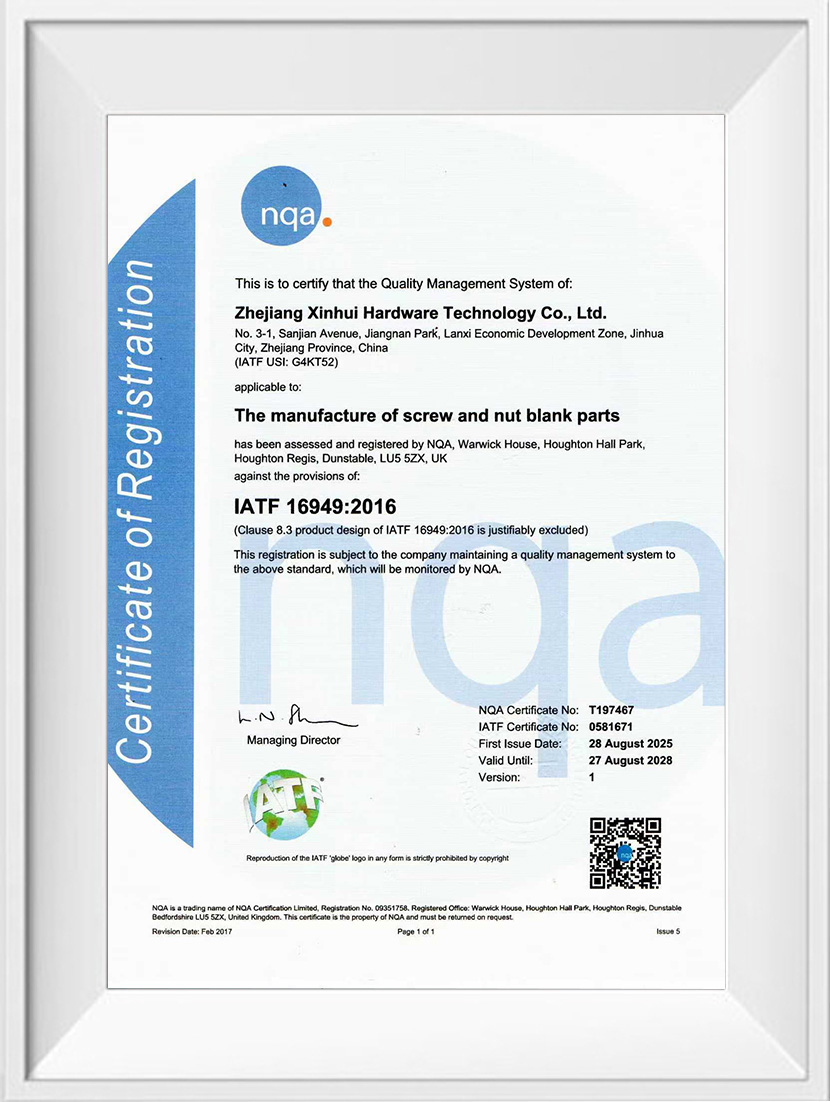
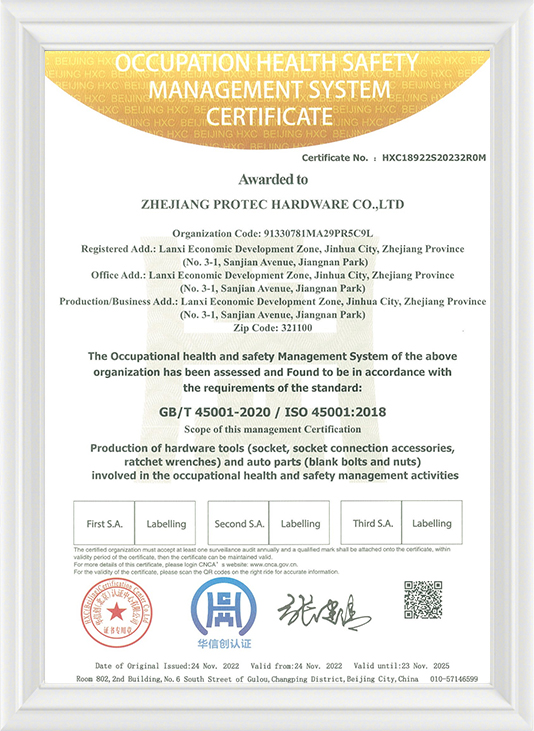
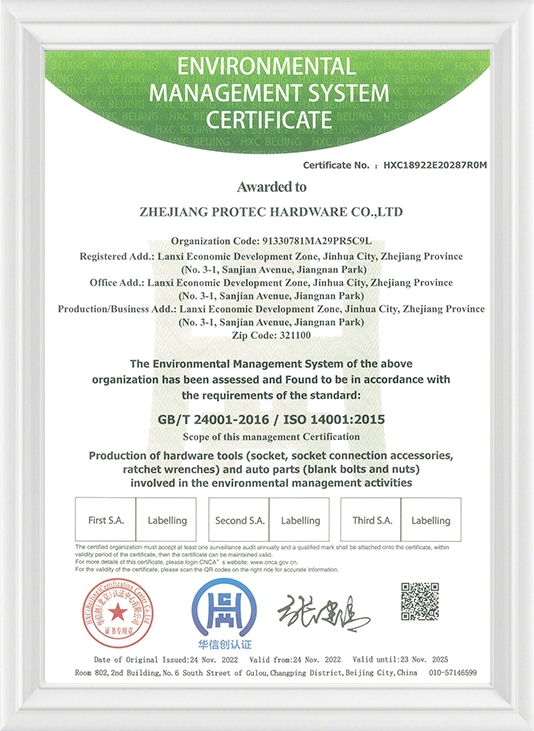
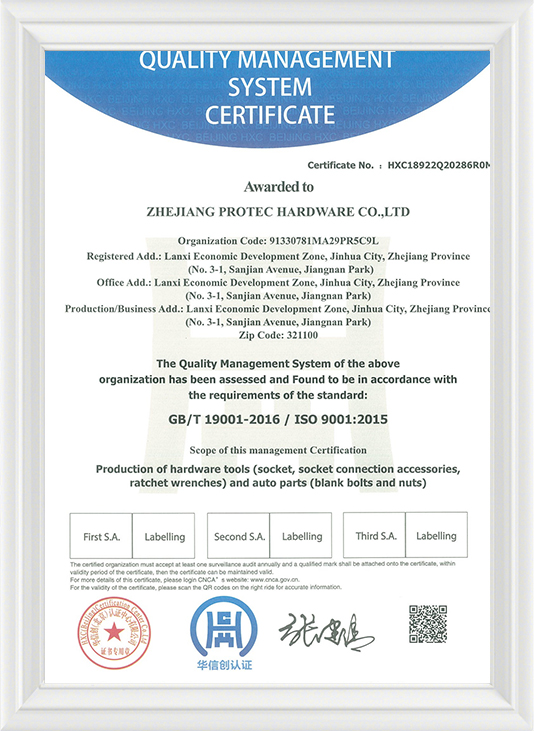
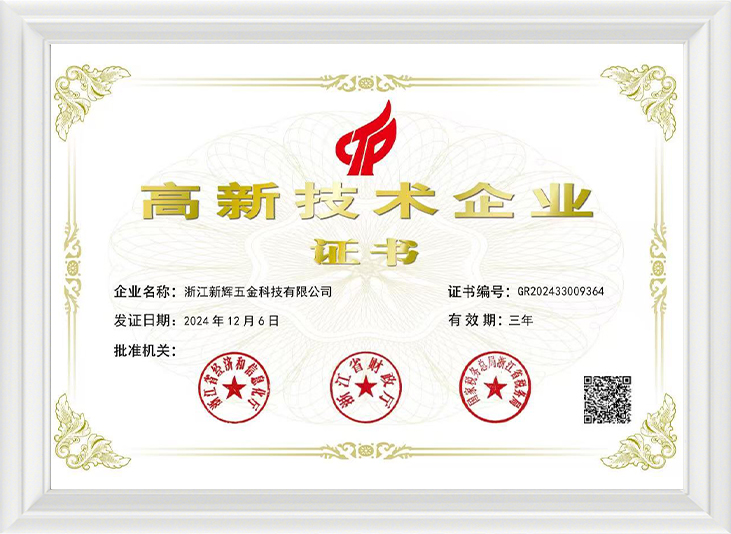
The company places great emphasis on modern management systems and has obtained the following certifications:
《ISO9001 Quality Management System Certification》
《ISO14001 Environmental Management System Certification》
《ISO45001 Occupational Health and Safety Management System Certification》
《IATF16949 Automotive Quality Management System Certification》
About Us
Zhejiang Protec Hardware Co., Ltd.
Certificate Of Honor
News
-
The automotive repair industry is undergoing rapid transformation as vehicles become more compact, electronically integrated,...
READ MORE -
The global automotive repair and maintenance industry is shifting toward faster workflows, higher precision requirements, and...
READ MORE -
The global automotive repair and maintenance industry is rapidly evolving as workshops face increasing pressure to improve ef...
READ MORE -
The automotive repair industry is evolving rapidly as vehicle designs become more compact, complex, and technology-driven. Me...
READ MORE
Impact Tools Industry Knowledge Extension
What Is the Difference Between an Impact Driver and an Impact Wrench?
An impact driver is a compact, high-speed tool designed primarily for driving screws and fasteners. It delivers rapid rotational bursts of torque, making it ideal for tasks like assembling furniture or installing drywall.
An impact wrench, on the other hand, is a heavier-duty tool designed for tasks requiring significant torque, such as removing lug nuts or bolts in automotive and construction applications. It provides powerful, high-torque impacts, making it suitable for heavy-duty fastening and loosening tasks.
Which Tool Should I Use for Automotive Repairs?
For automotive repairs, an impact wrench is generally the preferred choice. Its high torque output allows for the efficient removal and installation of lug nuts and other large fasteners commonly found in vehicles.
While an impact driver can handle some automotive tasks, it may not provide the necessary torque for larger bolts and could potentially damage smaller fasteners due to its high-speed impacts.
Can I Use an Impact Driver for Heavy-Duty Applications?
An impact driver is suitable for driving screws and fasteners in materials like wood, plastic, and light metals. However, for heavy-duty applications involving large bolts or nuts, an impact wrench is more appropriate due to its higher torque capabilities.
Using an impact driver for heavy-duty tasks may advance to insufficient torque, resulting in incomplete fastening or potential damage to the tool and fasteners.
What Are the Key Differences in Torque and Speed?
Impact drivers typically deliver torque in the range of 1,300 inch-pounds, with some models exceeding 2,000 inch-pounds. They operate at higher speeds, making them efficient for driving screws quickly.
Impact wrenches, however, provide significantly higher torque, often exceeding 1,000 foot-pounds, suitable for loosening or tightening large fasteners. They operate at lower speeds but with more force, making them effective for heavy-duty applications.
Are There Specific Attachments or Accessories Required?
Impact drivers use 1/4-inch hex shank bits, making them compatible with a wide range of screwdriver and drill bits. They are ideal for tasks that require precision and speed.
Impact wrenches utilize square drive sockets, commonly in sizes like 1/2-inch, 3/8-inch, or 1/4-inch. These sockets are designed to handle the higher torque output of the wrench and are suitable for tasks like removing lug nuts or bolts.
Which Tool Is Better for Home Use?
For general home use, an impact driver is often sufficient for tasks like assembling furniture, installing shelves, or hanging pictures. Its compact size and versatility make it a valuable tool for DIY projects.
An impact wrench is more specialized and is typically used for automotive repairs or other heavy-duty applications. If your home projects involve frequent use of large bolts or nuts, an impact wrench may be necessary.
Can I Use an Impact Driver with Sockets?
While it's possible to use an impact driver with sockets by using a socket adapter, it's generally not recommended for heavy-duty tasks. The impact driver is designed for driving screws and may not provide the necessary torque or control when using sockets, potentially pilot to damage or safety issues.
For tasks involving sockets, an impact wrench is the appropriate tool, as it is specifically designed to handle the high torque required for such applications.
How Do I Choose Between an Impact Driver and an Impact Wrench?
Consider the following factors when choosing between an impact driver and an impact wrench:
- Application: Determine the type of tasks you'll be performing. For driving screws and fasteners, an impact driver is suitable. For loosening or tightening large bolts, an impact wrench is necessary.
- Torque Requirements: Assess the torque needed for your tasks. Impact drivers offer moderate torque suitable for general fastening, while impact wrenches provide high torque for heavy-duty applications.
- Tool Size and Weight: Impact drivers are generally lighter and more compact, making them easier to handle for extended periods. Impact wrenches are larger and heavier, reflecting their higher power output.
- Attachments: Consider the types of attachments you'll need. Impact drivers use hex shank bits, while impact wrenches use square drive sockets. Ensure you have the appropriate accessories for your chosen tool.


Copyright © Zhejiang Protec Hardware Co., Ltd.

ODM Impact Wrench